Implant
Overdentures
A denture that clips onto implants instead of resting on gum. You still take it out to clean it — but it no longer lifts when you eat, and for a lower denture that is the whole difference.
Price ranges, and what moves them →
A case from the practice
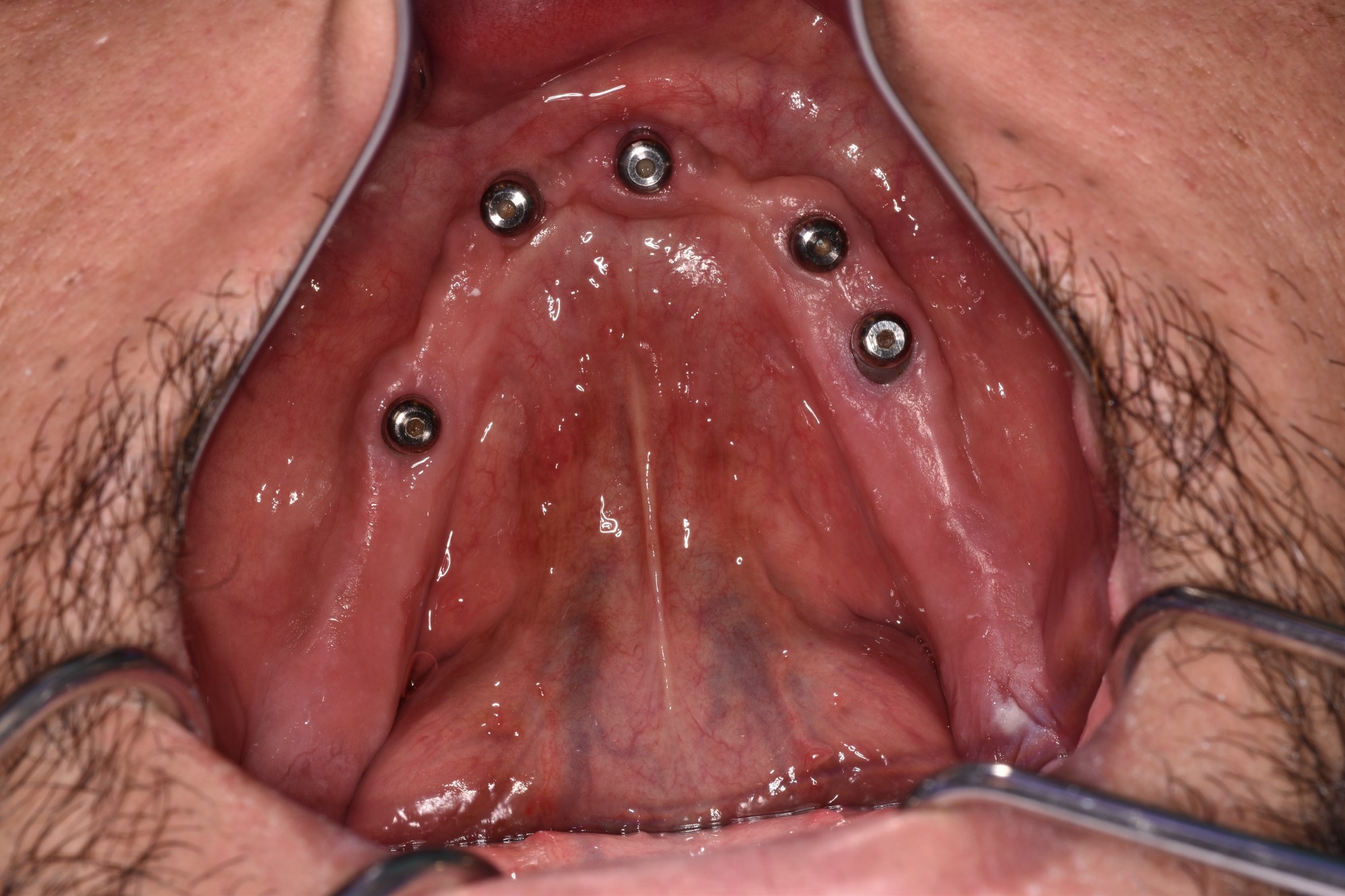
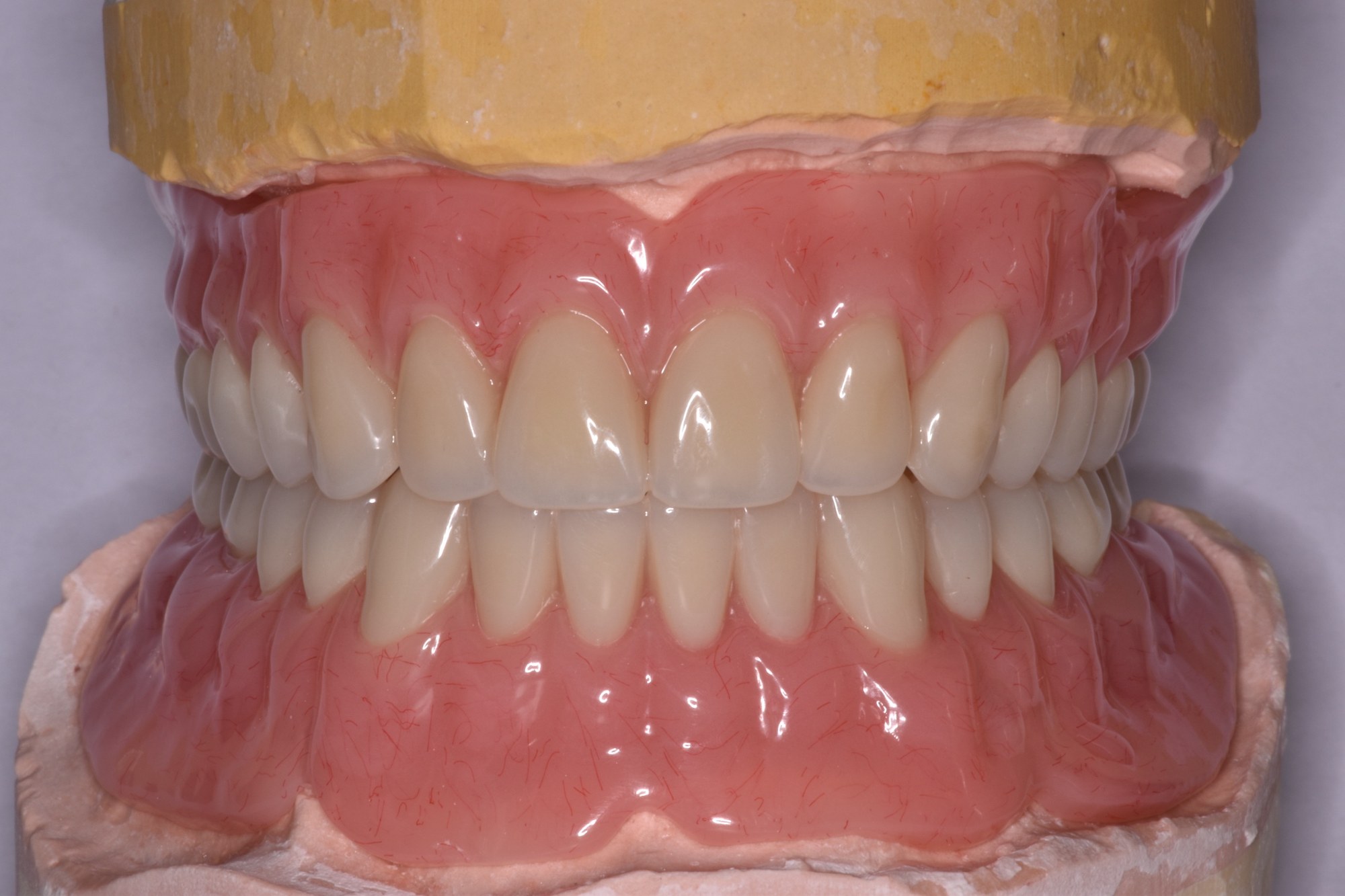
A real case treated at the practice, published with the patient's consent. Every mouth is different and no two cases follow the same path.
An implant overdenture, step by step
Illustrative diagram. Every case is planned on its own imaging.
Removable, but anchored
An overdenture looks like a denture and comes out like a denture. The difference is underneath: it clips onto two or more implants, so it cannot lift, tip or slide while you chew. You press it in; you take it out at night to clean it and to let the tissue rest.
For a lower arch this is the single biggest improvement available. A conventional lower denture floats because nothing holds it. Two implants stop that outright.
How it differs from a fixed full arch
This is the distinction that matters most, and the one most often blurred:
- An overdenture is removable by you. Fewer implants, lower cost, easier to clean, and the flange can support your lip where bone has been lost.
- A fixed full-arch restoration is removable only by us. More implants, higher cost, closest to natural teeth, and you clean around it rather than taking it out.
Neither is better in the abstract. Bone volume, lip support, how much you can spend and how well you can manage cleaning all decide it, and we go through them with you before anything is placed.
The sequence
Implants are placed, then left three to six months to integrate with bone. You wear a denture during that time — usually your existing one, adjusted so it does not press on the healing sites.
When the implants have integrated, the attachments go in and the denture is converted or remade to clip onto them. From that appointment onward it holds.
What it asks of you later
The nylon inserts inside the denture are wear parts. They soften over time and get replaced — typically once or twice a year, and it is a quick visit, not a repair. Expect it rather than be surprised by it.
The implants themselves need the same cleaning discipline as teeth. An implant does not decay, but the gum and bone around it can become inflamed and that is what loses implants.
Common questions
Start with a
Remote Consultation
A 30–60 minute video consultation with Dr. Díaz-Rubayo. Review your history, share records, and receive an honest assessment — from wherever you are.
Book Your ConsultationOr call (787) 765-8394